








Ambassador of the Republic of Korea to Nigeria, H.E. Jeong Yo-an, has affirmed his country’s readiness to partner Nigeria to improve the creative economy and culture development, adding that culture opens doors to countries around the world.
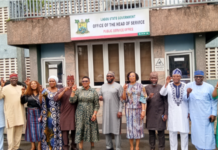
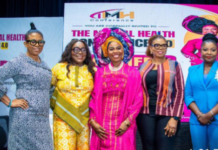
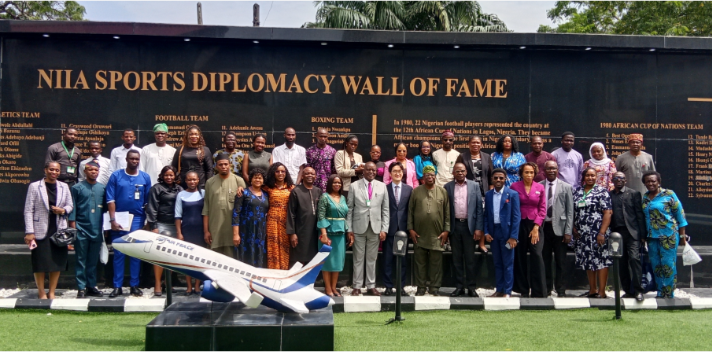
Yo-an disclosed this at the Embassy of The Republic of Korea and Nigerian Institute of International Affairs (NIIA) Joint Seminar, themed: “From Soft Power To Shared Prosperity: Korea-Nigeria Cultural Cooperation and the Creative Economy,” held at the institute on Wednesday.
While commending the cordial ties existing between Nigeria and Korea, Yo-an said that since 1980, the ties between the two countries “have been built mostly on oil, gas, and construction. Those ties remain important,” adding that “next chapter can be written by artists, designers, entrepreneurs, and students.”
Korean ambassador noted that the theme of the seminar is apt, as, according to him, “Soft power matters when it becomes something dear.”
Speaking on how both countries can turn culture into prosperity, Yo-an said that Korea was hit hard by the financial crisis in the late 1990s, adding that at that moment, Seoul “began to treat culture not only as art, but as an industry. In 1999, we passed a basic law to promote culture.”
He said that Korea’s wave helped the government to generate nearly $19 billion in exports, adding that “it is one of the fastest internet networks in the world. Together, this led songs to travel far beyond our borders. In 2025, Korea’s content export reached a record $14.9 billion.”
Yo-an said that the government’s role was vital in protecting
infrastructure, intellectual property, finance, and education and training.
The Korean ambassador, who commended Nigeria for having a unique and one of the most popular cultures in the world, said: “Nigeria does not need to borrow anyone’s culture. It already has one of the most popular cultures in the world. Many would tell African stories on every continent. Afrobeat is heard on playlists from London to Seoul.”
He affirmed that Nigerian designers, writers, and comedians are sweeping global taste, adding that “Nigeria’s creative economy currently contributes about 2.6 percent of its GDP. Under its broad creative economy agenda, it has set a target of creating 2 million new jobs by 2030.”
According to the envoy, Nigeria’s Minister of Arts, Culture and Creative Economy, Hannatu Musa MUsawa, has listed obstacles to the creative economy to include limited funding, weak infrastructure, and difficult regulation, adding that “Korea faced similar problems.”
He said that five years ago, piracy nearly destroyed the “Korean music industry. Better copyright protection and digital platforms that paid creators fairly brought it back,” even as he suggested that “Nigeria’s creators deserve the same payment in the world.”
“The affection runs both ways. In 2024, Nigeria ranked fifth in the world in watching Korean dramas on Netflix. In Korea, young people dance to Afrobeats and watch Korean films.
“Last month, at the Seoul Africa Festival, a Nigerian singer performed songs from a Korea-Nigeria collaboration that blends Afro-pop and K-pop. Our two cultures are now creating together. The Korean Culture Center opened in Lagos in May 2010.
“It offers Korean language classes, film screening, and music events. In June this year, more than 400 young people joined our K-pop festival in Lagos. In August, the Festival brought Korean traditional music and dance to Lagos.
“The K-Highest Degrees Festival moved to Abuja. And in October, about 350 athletes competed in the 14th Korean Ambassador’s Cup Taekwondo Championship. Every year, Nigerian students study in Korea on a Korean government scholarship.
“Nigerian creators have already made two Korean-Nigerian dramas, My Sunshine in 2024 and My Area Lover is Air Free.
“Some Nigerian scholars say our cultural role is to focus on Abuja. They have a point. We would like to reach more universities and more cities in the year ahead.”
While commending the cordial ties between Nigeria and Korea, the ambassador said that “since 1980, our ties have been built mostly on oil, gas, and construction. Those ties remain important. The next chapter can be written by artists, designers, entrepreneurs, and students.”
Tak Namguk, Deputy Head of Mission at the Embassy of the Republic of Korea (South Korea) in Abuja, speaking on what Korea would gain from the collaboration, said that according to the data, Nigeria’s creative economy accounts for 2.3% of the GDP.
He added that Nigeria expects by 2030 to increase two million jobs with regard to the creative economy.
Noting that Korea and Nigeria already have a strong collaboration, Namguk said: “For instance, Korea and Nigeria had two dramas. There are two dramas, one in 2024, My Sunshine. This year, we also have My Alien Lover. That’s a collaboration made between Korea and Nigeria.
“It is also in Korean, English, and Yoruba languages. It shows a clear example of how our cultural collaboration is well maintained.”
Saying that Korea and Nigeria both have their unique cultures, Namguk added: “What I would like to point out is that we need collaboration. With its unique culture, Korea also has some platforms to make use of. Nigeria has the core culture that needs to be promoted across the world.”
Director General, NIIA, Prof. Eghosa Osaghae, speaking on how Nigeria can turn its global cultural influence into economic benefits, said that Nigerians have strength in an area that they do not often remember.
“People think of entertainment, that is now called the creative economy, but they have not taken stock of the great influence that that has meant for the world. Even though the world has continued to show us in bits and pieces.”
The DG said that Nigerians can translate the cultural influence into economic gain, adding: “If we as a country do not begin to harness these opportunities, and we leave them to the rest of the world to pry upon, we will not get all the benefits.”
Prof. Osaghae said that Nigerians need to channel things from the informal sector where they belong right now to the formal sector, adding: “So we have heard that there are great benefits and earnings that we get from the showcasing and the mainstreaming of our talents.
“Now, if we have to do what the Koreans have done, then, we must come as a matter of policy packaging to first ask questions: What and what are available? How do we get them together? And how do we as a country then put that forward?”
Prof. Osaghae said that the image of Africa that is found in South Korea today as constructed by the media has improved significantly, adding: “So this is a land of opportunities. So, it’s for the YouTubers of this world to see these kinds of constructions and bring South Korea closer home to us.”
He noted that Nigeria is moving from an aid dependency nation to becoming a donor nation, which is a very significant thing.
According to Osaghae, “The reciprocity of trade and investment and industrialization would mean that South Korea would come to Nigeria to invest in our industrial hubs so we can bring technology here, not from a distance, but we bring technology that can be domesticated, which is very good. We have a huge youth board. They want to create capacities for absorbing that board.”
According to him, “South Korea has also proven to be different in an interesting way with its creative industry. Over the last five years or so, we’ve seen South Korean movies and South Korean music coming into Nigeria, and in return, Nigerian music is going to South Korea. Every year, I know that they organize a festival of sorts for the creative arts in Nigeria.”
Prof Femi Otubanjo, a research professor at the NIIA and chairman of the event, speaking on the expected changes from the conversation, said that Nigeria still remains a developing country, “which means that we are a work in progress,” adding: “We are still trying to build every aspect. Most of the things that were said here… If we go to another sector, agriculture, industry… The same problems persist.
“Financing, laws, protective laws, piracy… Those are things that Korea has managed to overcome. They’ve managed to put in place effective systems. Their creative industry is doing so well all over the world.”
He said that the South Korean creative economy is a perfect model for Nigeria “because they also started with all the problems that we have now. Piracy is perhaps one of the most difficult problems in Nigeria.
“And that has to do with our own laws and law enforcement. If we do not improve our enforcement… The creative economy will not be okay. Because people will produce music, films, dramas… And somebody will have stolen it before it even enters the market.
Prof. Otunbajo said that the purpose of the seminar is to look at comparative creative economies, how Korea has been able to manage all the cultural and creative perspectives of its people for their own benefit.
He said that the Nigerian film and music industry should be able to generate so much just like their remittances from the Diaspora, adding that with that, the country “should be able to talk about 20-50 billion a year.”
On the structure to put in place to sustain this, Prof. Otunbajo said that Nigeria has got to the point where things like this a policy brief must be put in place.
He said that Nigeria should learn how Korea overcome piracy and recommend it to the citizens.
He said that there would be policy briefs, which would be sent to people who can make decisions to ensure that the creative get financing, and solutions to the problem of piracy confronting them “So that they can see what we are seeing and hope that they will react.”